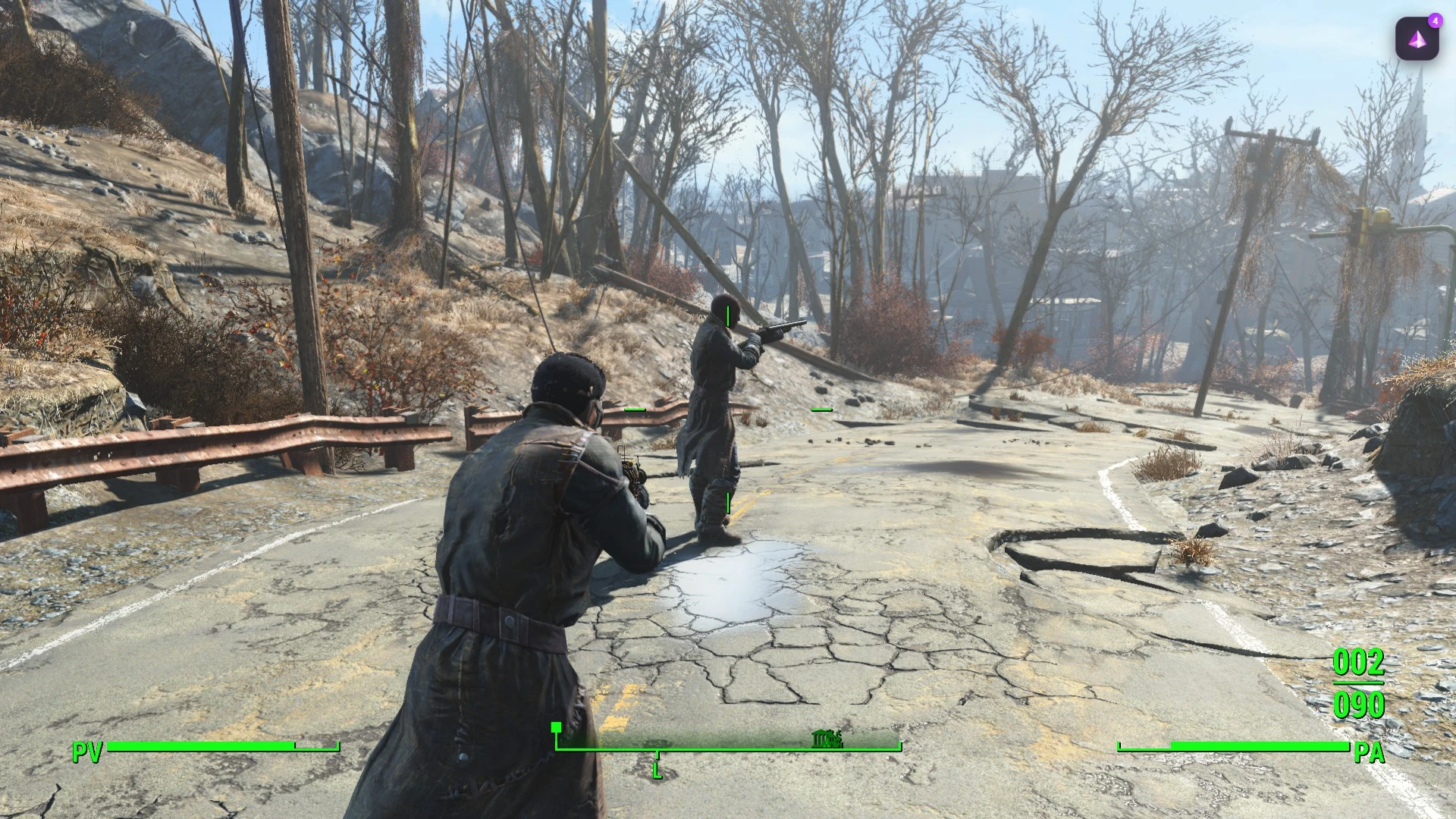
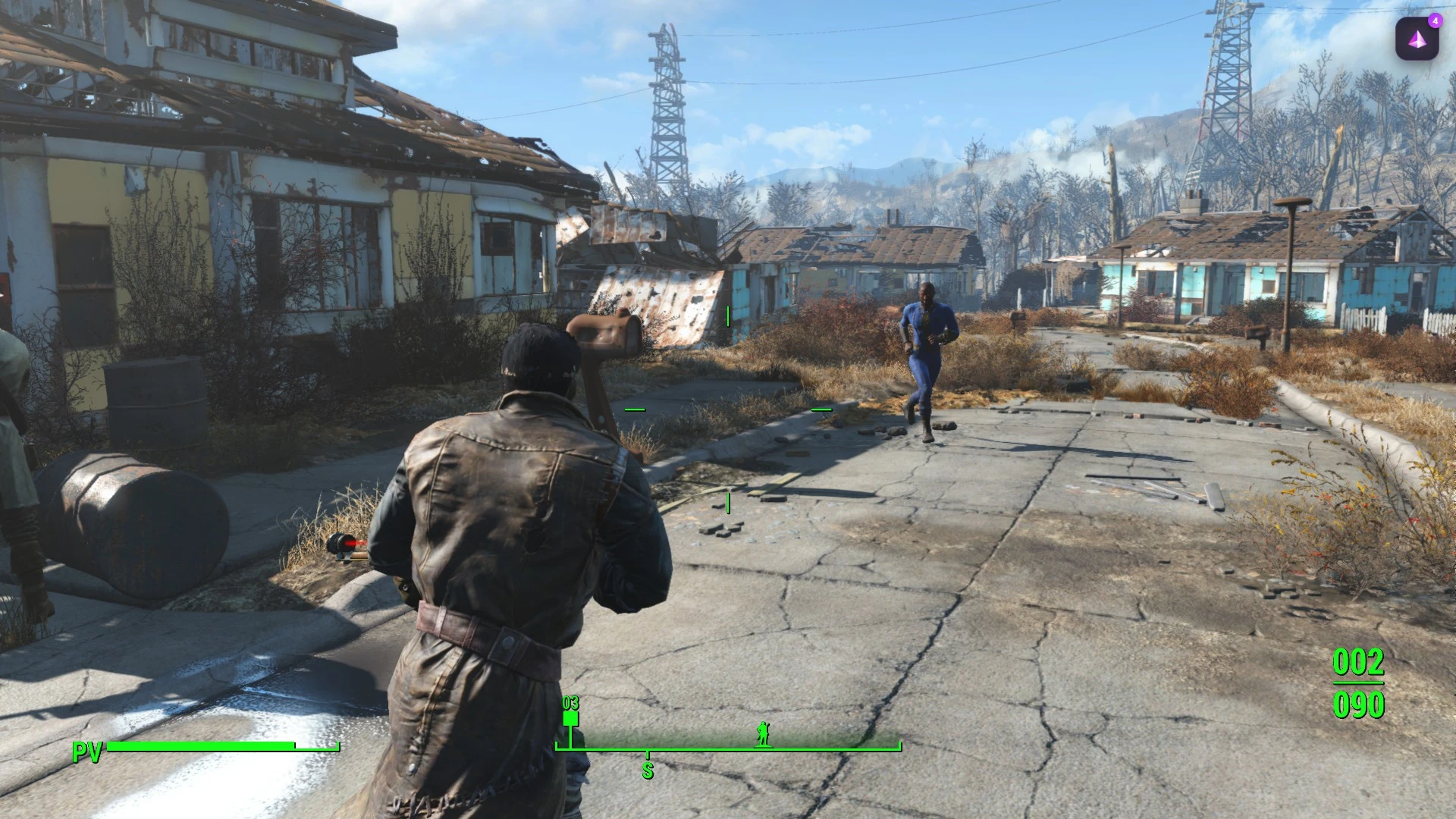
> CO_NODE // HANDSHAKE ACCEPTED // DEDICATED HOST> WORLDSPACE COMMONWEALTH // REMOTE ACTORS 02> REPLICATION CHANNEL // BASELINE LOCKED> COMBAT DISPATCH // CAPACITY CHECK ACTIVE> NEXT QUEUE // PLAYER CONTROL AND ADMINISTRATION
VAULT-TEC DEVELOPMENT TERMINALCHANNEL: COMMONWEALTH ONLINE
Field briefing // development status
The Commonwealth Online roadmap
A capability-based readout of the multiplayer framework: what is operational, what is under active fire,
what is queued for the next dispatch and what remains beyond the current horizon.
CORE LINKONLINE
ACTIVE DISPATCHCOMBAT / CAPACITY
Dispatch board
Where the work is moving
Current // Active
Combat & capacity
Current work is focused on making shared players behave correctly under combat pressure while increasing the number of players the architecture can carry.
This public readout tracks user-visible capabilities, not every internal component migration. Status
describes the current project state: complete means the capability is working;
active means it is being refined; next is queued work; future is intentionally unscheduled exploration.
CompleteOperational capability
ActiveCurrent engineering focus
NextQueued after active work
FutureLong-range direction
Multiplayer doctrine
The systems behind the spectacle
COMMUNITY CAPTURE // 01
A shared world needs a shared signal
The foundation is not just moving actors. It is deciding who owns a state, who needs to receive it and what happens when the connection gets rough.
COMMUNITY CAPTURE // 02
The long game is a world that survives
Social systems, settlements, inventory and quests only become multiplayer features when ownership, persistence and recovery are explicit.
Readiness audit
Multiplayer gates before the next frontier
These are the engineering gates behind a credible multiplayer project. The public feature phases show what
players will feel; this audit shows what has to be true underneath before those features can scale.
Foundation
Message semantics
Reliable control traffic, snapshot baselines and deltas, per-peer publication and client interpolation give the session a usable replication spine.
Queued
Authority & relevancy
The server already filters interest by cell and worldspace. Per-entity authority, priority, instancing and epoch handoff are the next trust and bandwidth boundary.
Hardening
Identity, resume & recovery
Persistent client/server Iroh identities, EndpointId-keyed profiles, authenticated directory ownership and reconnect metadata are now working; broader identity policy and legacy activation retirement remain active work.
Hardening
Validation & abuse resistance
Packet bounds, admission framing, EndpointId rate limits, Argon2id password checks, persistent bans, authenticated admin access and server-side trust boundaries protect the session; new gameplay systems must preserve those gates.
Proof gate
Multi-client acceptance
A multiplayer feature is not ready from source tests alone. Capacity, loss and jitter, reconnects, persistence recovery, cross-version sessions and real two-client gameplay need repeatable release evidence.
Operations log
Milestones from the terminal archive
01
Complete // PHASE 01
Foundation & world link
The core link between Fallout 4 clients and a dedicated server is operational. Players can enter the same Commonwealth and see the session move through the game world.
Systems on the manifest
Dedicated server runtimeExternal server process with multiple clients, JSON configuration, a graphical host, LAN/TCP hosting and Iroh internet hosting.
Remote player proxiesRemote players are represented in-game with synchronized position, rotation, cell and worldspace transitions.
Movement stateIdle, movement, sprinting, sneaking, jumping, weapon-drawn state and teleports are carried across the session.
Version coverageThe framework supports Fallout 4 Anniversary Edition and the original release in the same project.
02
Complete // PHASE 02
Identity, loadout & session sync
The systems that make another player feel like a player are in place, from appearance and apparel through the current shared time and weather path.
Systems on the manifest
Character appearanceBody morphs, tints, hair, head parts, facial sliders and versioned optional data are replicated.
Clothing & equipmentTracked apparel slots stay mirrored, including equipment changes made while a player is standing still.
Ranged weapon stateRight-hand weapons resolve locally, equip on proxies and preserve drawn or holstered state.
Shared time & weatherTime, days passed and exterior weather synchronize, with corrections after menus and loading.
03
Complete // PHASE 03
Terminal UI & hosting operations
The project has the practical tools needed to discover a server, create a character and operate a development session without hiding the multiplayer layer behind a prototype screen.
Systems on the manifest
Custom main menuPrismaUI-backed HTML menu with multiplayer access, embedded browsing, settings and input capture.
Server browserPublic Browse, LAN discovery, favourites, recent servers, TCP/Iroh Direct Connect, password prompts and controller support.
Server-based charactersPer-server saves, in-game character creation and profile binding when reconnecting.
Internet hosting & host toolsGraphical hosting, private invite codes, optional public listing, passwords, connected-player status, kick/ban controls, CLI tools and deployment scripts.
04
Active // PHASE 04
Combat & capacity
Current work is focused on making shared players behave correctly under combat pressure while increasing the number of players the architecture can carry.
Systems on the manifest
Animation refinementArmed locomotion, draw and holster transitions, firing, melee, strafing and jump recovery.
Weapon & combat actionsFiring, reloads, melee, grenades, aiming, hit reactions and death or revival events.
Expanded player capacityProxy allocation and runtime performance work toward a long-term architecture target of approximately 16 players.
05
Next // PHASE 05
Player control & server administration
The next dispatch expands what players and server operators can control while they are connected to a session.
Systems on the manifest
Multiplayer settingsProfile, voice, map and social, network and keybind options with persistent configuration.
Fallout 4 settings bridgeOpen the original Scaleform settings over the Commonwealth Online UI when the game needs its native controls.
Pause menu & mapZoom, pan, player markers and settings panels connected to live multiplayer data.
Expanded server administrationExtend the shipped password, kick, ban, unban and session-status controls with richer permissions, remote administration and logs.
06
Future // PHASE 06
Social layer
Once the session and combat foundations are stable, the roadmap turns toward communication, identity and coordinated travel through the Commonwealth.
Systems on the manifest
Map & markersLocal and remote players, friends, locations, quests and custom markers.
Voice & text chatProximity voice, party channels, server text chat, direct messages and muting.
Teams & social featuresParties, shared markers, invitations and group voice or text channels.
07
Future // PHASE 07
A living Commonwealth
The long-range work is shared world simulation: interactions, creatures, progression, settlements and the public infrastructure needed to support it.
Systems on the manifest
Interaction syncDoors, containers, terminals, workbenches, pickups and dialogue with shared versus local rules.
Enemy & NPC syncShared positions, combat state, health, death, loot and basic AI coordination.
Quest & world progressionSelected quest stages, discovery, cleared locations, workshops and world-state changes.
Settlements, power armour & tradeCooperative construction, power armour state, inventory transfers, trading and shared persistence.
Mod compatibilityLoad-order checks, version negotiation and warnings when peers use content a client does not have.
Public server infrastructureMaster listings, filters, latency and region information with moderation support.
Operator briefing
The short version
The server, player replication, appearance and shared world-state foundation is already working. The
present push is combat fidelity and capacity. Settings, map, social systems, NPCs and persistent world
simulation follow as their ownership and compatibility rules become safe to ship.